Wednesday, February 22, 2006

Tipong - David and Friends

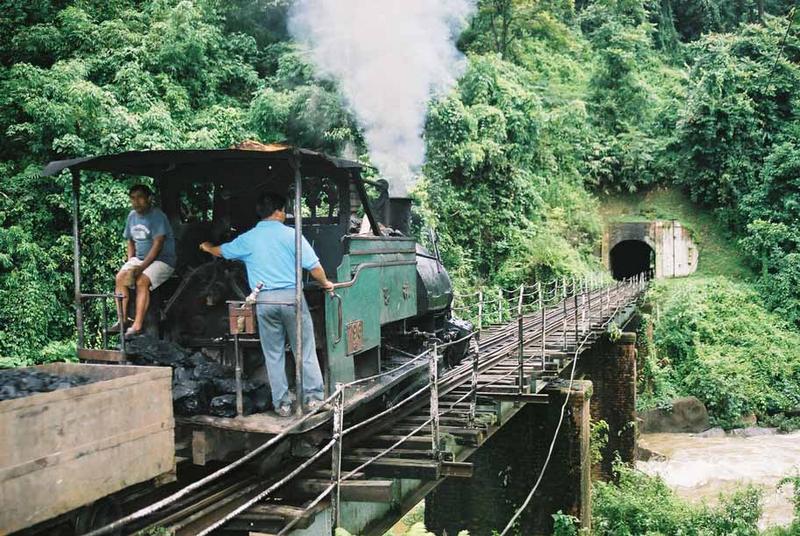
Here is our own version of Thomas the Tank Engine. Unlike Thomas this is for real. Presented here are some pics of the steam railway in operation at the Tipong Colleries of Assam.

Thanks to Mr. Mohan Bhuyan (IRFCA) for lending me his lovely photographs.


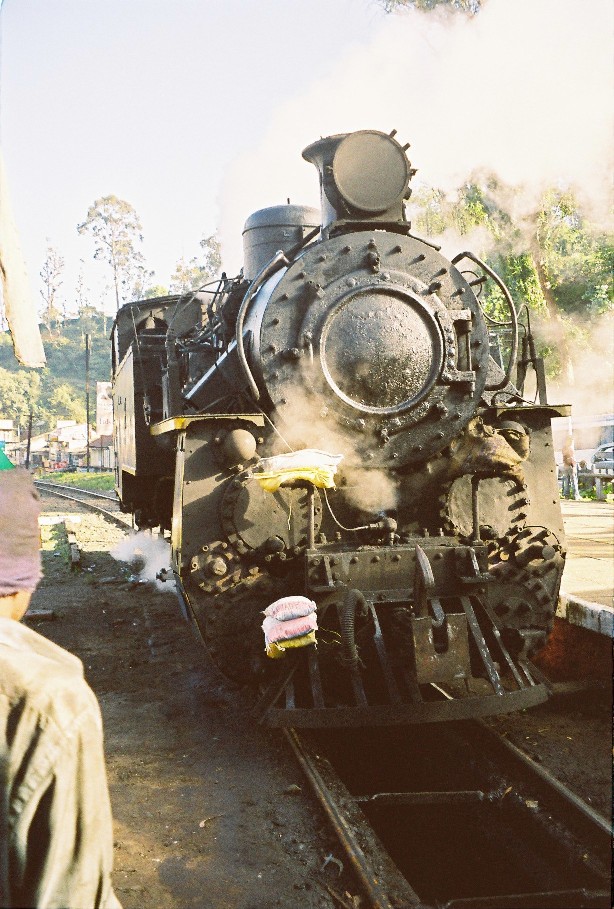
Wonder who is this? This is B 796 ( B class 0-4-0ST no. 789 ) a tiny coal hauling saddle tank steam locomotive.


The loco is same as the one that takes you to Darjeeling.


That is little David. Yes that is his name given by the folks here. David is more famous outside India! Every year hordes of steam enthusiasts visit this place to witness David in action. He and his friends are among the last narrow gauge steam locomotives still operating in the word.


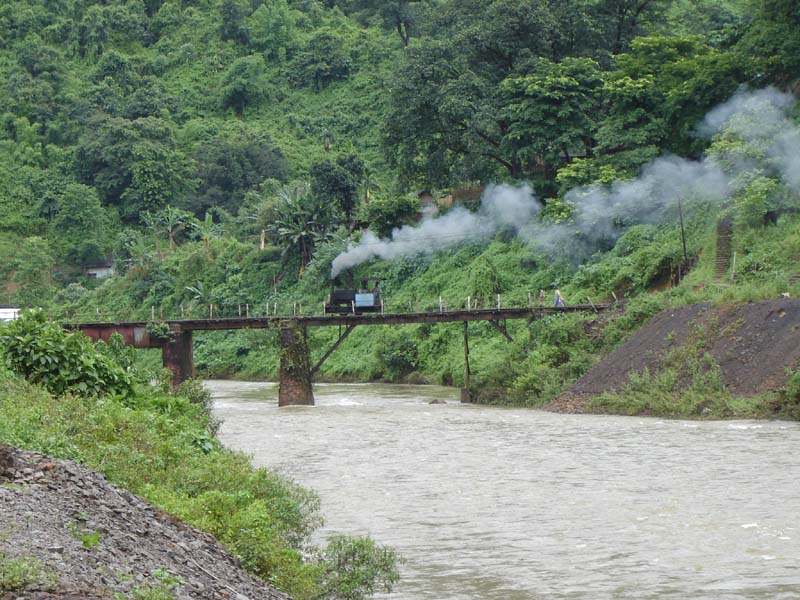
David (Bagnall 0-4-0ST ) is the only loco light enough to be allowed on this particular bridge.


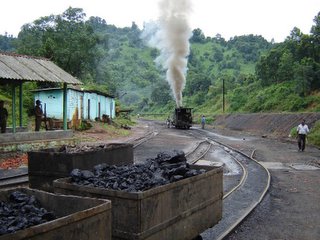
B796 reverses itself to its little trucks of coal.


Who says coal mines are ugly, dirty sites. David and is friends make this colliery only more beautiful...


It is a day in life as usual in Tipong...and its steamers. Tipong..one of the last steaming villages on earth.]
(B796 Hauling its load from the mines through the village)


All Photographs: Courtesy Mr. Mohan Bhuyan (IRFCA)

Monday, February 20, 2006

Amarkantak

February 3, 2006. I was in Bilaspur, Chattisgarh, convalescing from the varicose vein surgery. My folks live here and they decided to treat me an early birthday surprise (Feb 4) by taking me to Amarkantak, about 110 Km from here. We started off early in a Maruti Wagon-R. The route took us north of Bilaspur to the border of Madhya Pradesh where Amarkantak was located. It was dark at 5 Am and most of my journey was spent in the darkness. Nothing much except that at Kota, we were stopped at a gate manned by forest officials. They were polite and helpful and said that both the forest and the ghats start from this point.

Later at 6:30 AM, daylight broke and we found ourself at another gate, this time for an entry into the Achanakmar forest. This was a teak and sal forest in its natural best. The road was great for a small state like CG and the journey was pleasant. It was somewhat chilly and the air. The name Achanak-mar meant sudden kill and sent some more chill down the spine. There were liberal signboards of WWF and government of CG appealing to conserve forests, not to kill or poach animals etc. May be there is a connection between "Achanak-mar" and poaching!

Anyway, kudos to the Chattisgarh government in their conservation effort.

The teak and sal trees were the highlight of the drive. These are some of the best timber-producing trees one could find. Sal wood was used to make those highly durable railway sleepers until the railways decided to save forests and switch to metal and now concrete. These trees in the forest are now safe from vanishing due to the reserve status of Achanakmar. Unfortunately, except for a horde of monkeys and langurs, and a sole sighting of the common jackal, there was no wildlife to be seen. Probably they were taking it easy on this chilly morning.

As we crossed into MP, the road condition sublimed! It was one hell of a pothole ridden way to Amarkantak and we managed to reach Amarkantak by 8:AM only to find the village waking up to the new day.


Amarkantak is a villlage. A small and tiny one. Population would not cross 1,500, I guess. There would be more outsiders than locals here!

Situated in the Maikal (Mahakaal) mountains at an altitude of 1057 m, Amarkantak is a natural wonder and a religious place on the border of Madhya Pradesh and Chatthisgarh. In fact there is a dispute between the two on claiming Amarkantak. It is located in Anuppur District. This is the meeting point of the Vindhyas, the Satpuras and the Maikal hills. Most importantly, this is the place from where the mighty Narmada river (150m yera solder than the Ganga) begins her journey. Apart from the Narmada, another fine river, the Sone (Dehri-on-Sone in Bihar, venue of the longest rail bridge in India) also emerges in a different direction here. Amarkantak is , therefore, a holy place nestled in an ecological preserve.

Holy Amarkantak
In many parts of India, Narmada is considered much holier than the Ganga and is more than 150 million years older. Amarkantak itself is sacred to the Hindus and is deemed to be a door-way to nirvana. According to a legend Lord Shiva blessed Narmada with purifying powers such that the mere sight of Narmada is enough, whereas a devotee is required to take one dip in the Holy Ganga, seven days' prayers on the banks of Yamuna and three days' prayers on the banks of Saraswati for the same. Another legend goes on to state that the Ganga visits Narmada each year, dressed like a dark woman to cleanse herself with a dip in its waters. Yet another legend describes the birth of Narmada. Long ago there was a drought on earth and devas begged the Lord Shiva to quench the thirst of the land. While He was dancing on the hills one day, a drop of sweat from his forehead fell on the ground and created a beautiful lady, so lovely that all the gods tried to pursue her, but in vain. Lord Shiva decided to name her Narmada.

Saturday, January 28, 2006

A Day at Rameswaram


My day-trip to Rameswaram on January 1, 2004.


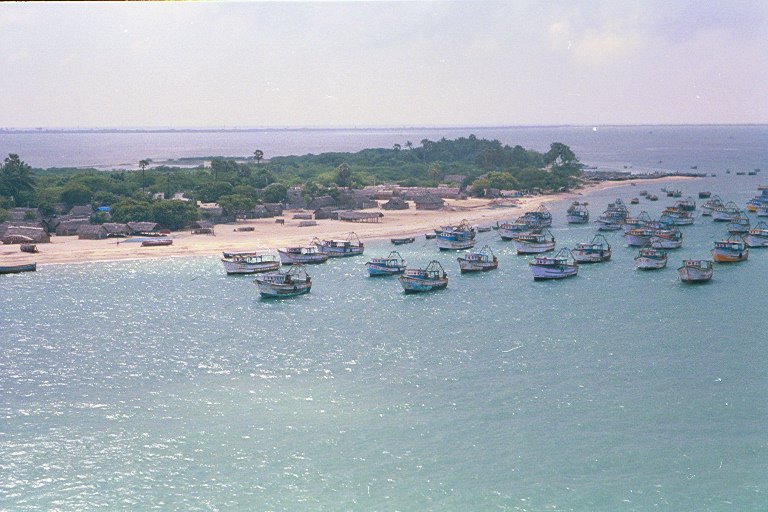
Rameswaram Island as seen from the Indira Gandhi Road Bridge


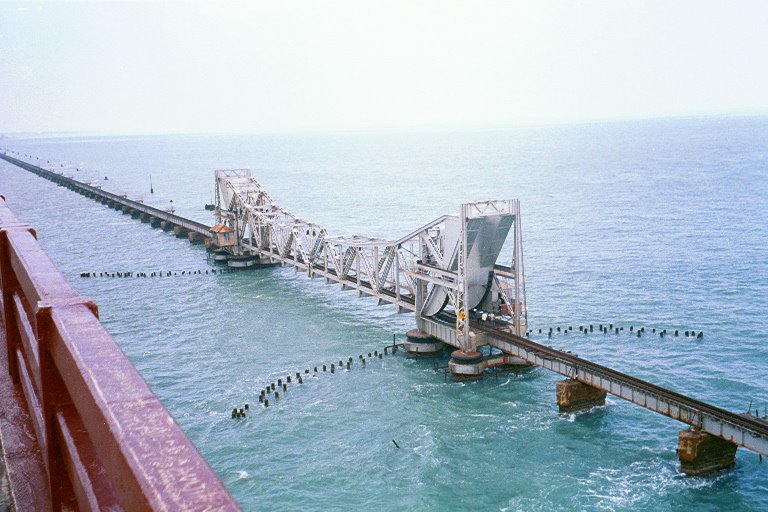
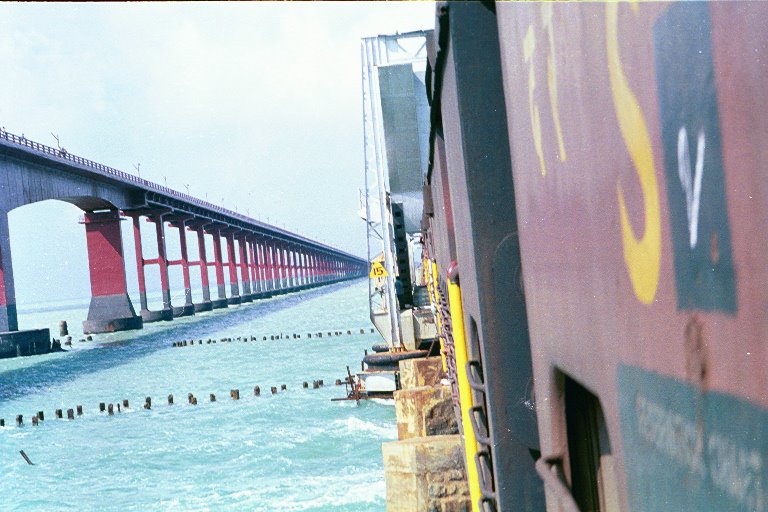
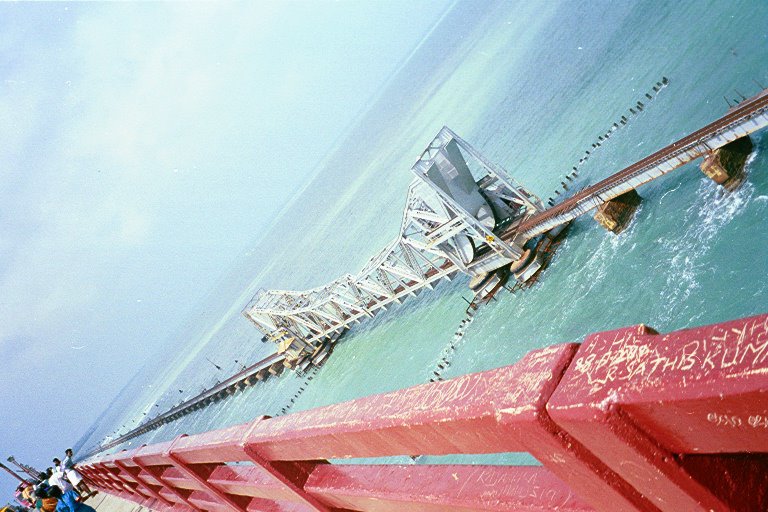
The older cantilever rail bridge (metre gauge) adjoining the new road bridge over the sea (Palk Straits). This bridge was completely washed off in the 1964 floods and was re-built. The remnants of the older bridge can be seen along the new one. The central portion is a cantilever that lifts up to allow boats and other bigger vessels to apss through the channel into the fishing harbour .


The rail bridge extending to Rameswaram island.


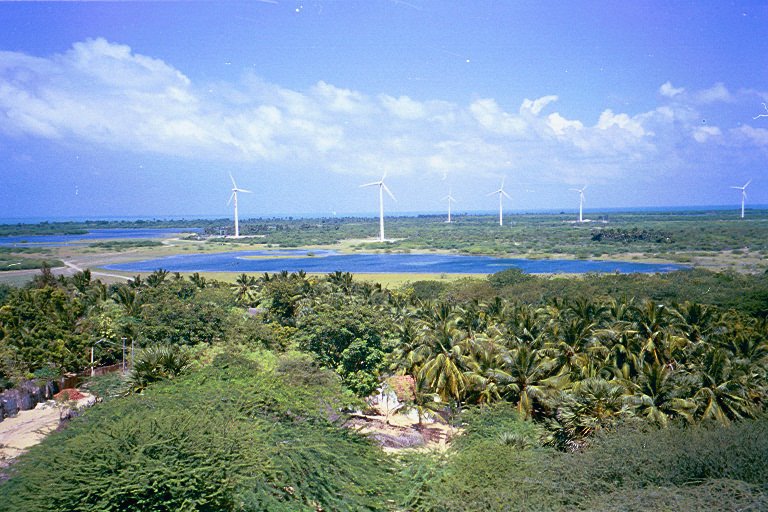
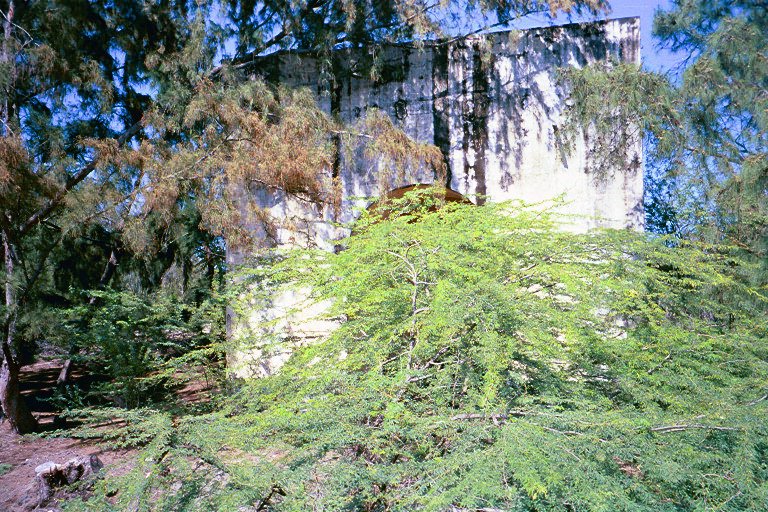
Rameswaram is a green and windy island. Windmills for generating electricity. This photo was taken from the Gandhamadhanam hill which houses one of the numerous Rama temples in Rameswaram.


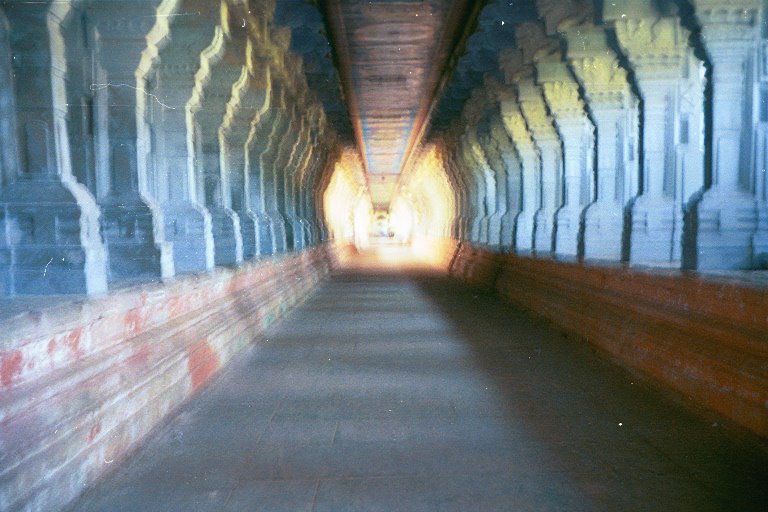
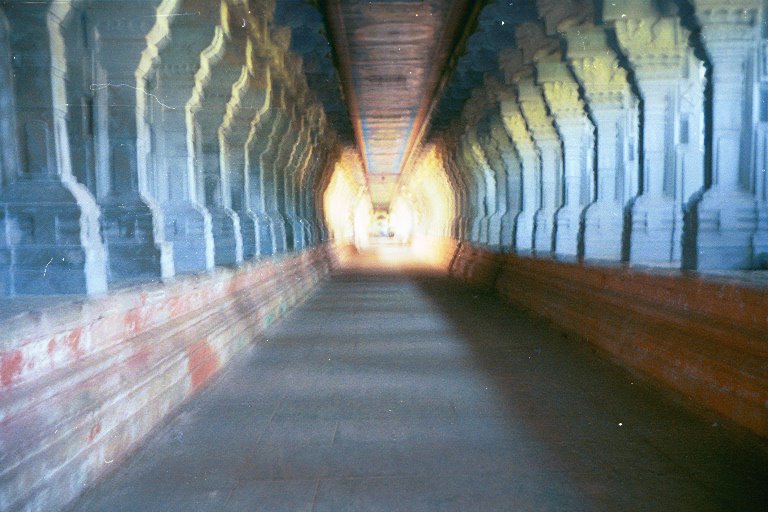
Ramnathaswamy Temple: 4000 feet long pillared corridor with over 4000 pillars, supposedly the longest in the world. The carved granite pillars are mounted on a raised platform. What is unique about this corridor is that the rock is not indigenous to the island and it was brought in from elsewhere in Tamilnadu across the sea.


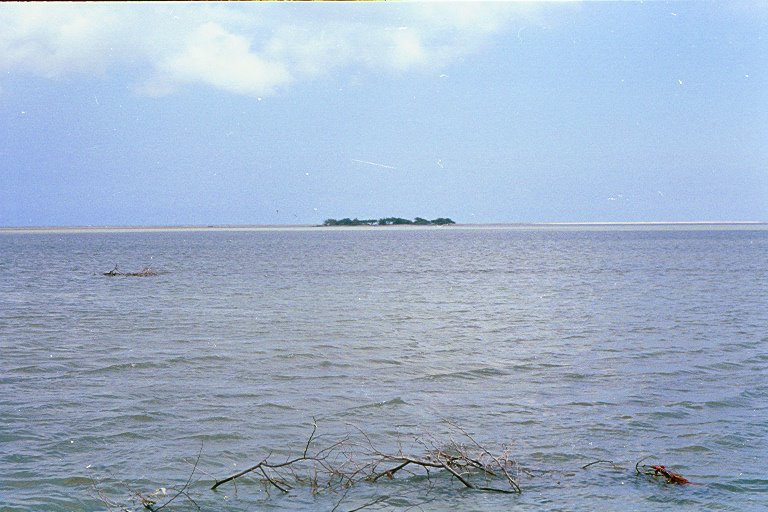
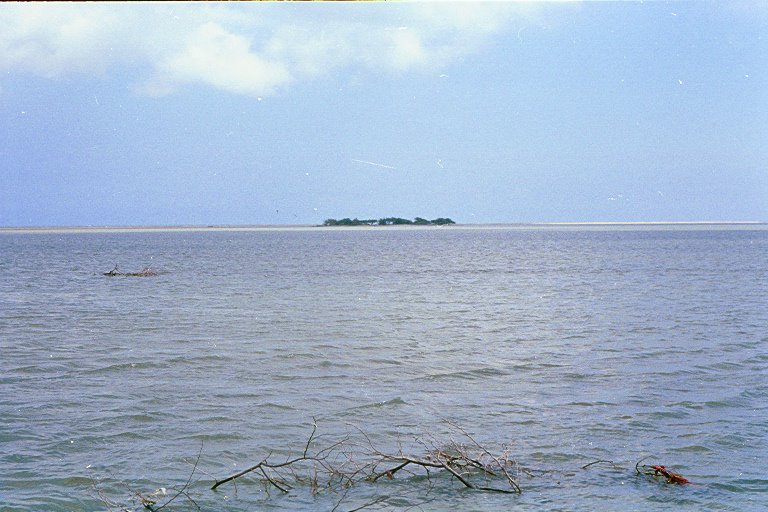
Is that Sri Lanka? An island in the sea far away as seen from he Kodandarama Temple whihc itself is on an island between Rameswaram and Dhanushkodi.


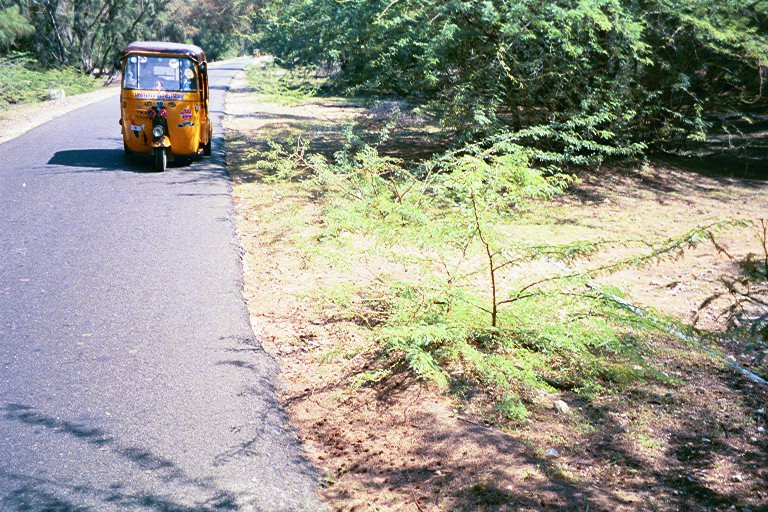
Freshly laid road to Dhanushkodi. This is a National Highway 49 (Kochi-Madurai-Dhanushkodi).
Note a railway track (a blue line) on the right side buried beneath the sand. This is the metre gauge line that used to run all the way to Dhanushkodi till 1964.


Ghost town! Dhanushkodi was abandoned during the 64 floods and remains a ghost town today. Seen here is an abandoned railway building.


Another shot of the rail bridge


Indira Gandhi Bridge connecting Rameswaram island with mainland India.

Friday, January 27, 2006

Sims Park, Coonoor


Sims Park, Coonoor


Parks are my favourite landscapes in cities and towns. Having lived in Bangalore for 4 years, I can say that a city or town without a park is no civilization at all. However, I cringed at the state of Lalbagh the last time I visited it ( almost an year ago after I moved to Chennai). There are in my opinion, two parks...recreational and botanical. Both the Cubbon and Lalbagh parks are botanical first ands recreational next.

A giant Fir tree

I was looking forward to the botanical gardens at Ooty during my vacation at the end of 2005. I was not expecting much from the lake, though water bodies surrounded by vegetation happen to be my most favourite landscapes. For some reason, I could not make it to the Ooty botanical garden. The Nilagiri Mountain Railway occupied most of my time and mindspace. At Coonoor, I suddenly found that I had 3 hours to spare before I could catch the next shuttle train back to Ooty. With time to kill, I explored all options at Coonoor for sight-seeing in the guide book. Sims Park was described as a garden in a ravine...mmmm sounds interesting. I decided to check it out. The auto drivers insisted that I take a more well trodden option: Dolphin's nose, tea gardens et....but my mind was set on the park. I was not disappointed.

Long and winding pathways.


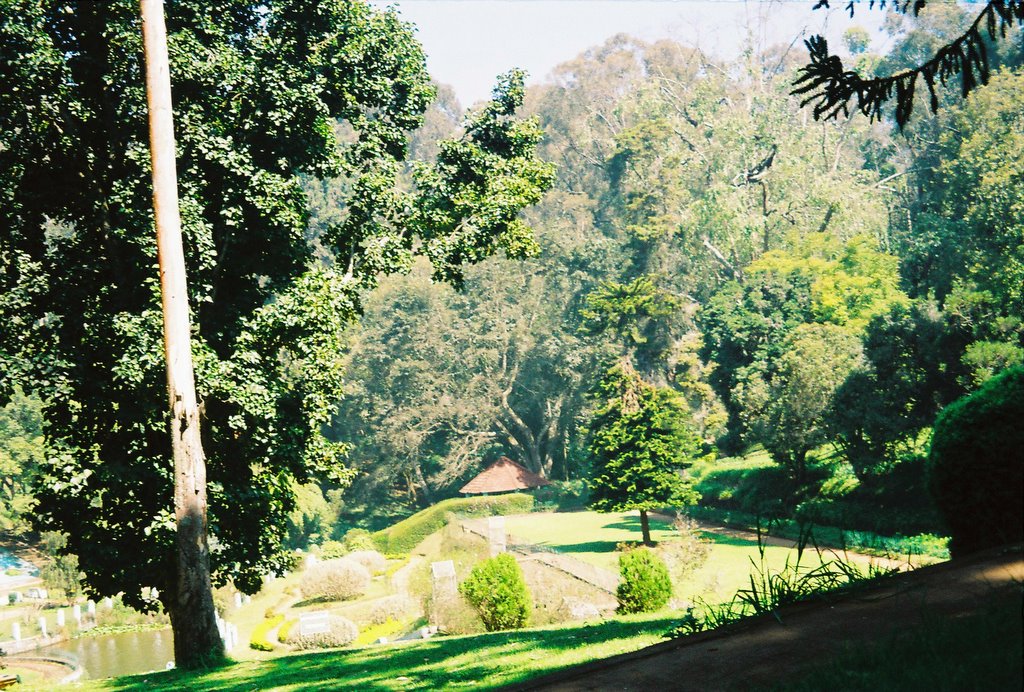
Sims Park is the best reason to visit Coonoor. It was built over 130 years ago, and covers about 12 hectares of land. The park is situated in a deep ravine on the north side of Coonoor Railway Station. Set in a natural forest on the slopes of the ravine with winding footpaths all over, the park is a home to a wide variety of trees, brought here from all parts of the world. The grass is always green and fresh and in winter, the mist mingles freely with the trees giving you that romantic atmosphere seen only in movies. This park is more compact and definitely much prettier than the botanical gardens at Ooty.

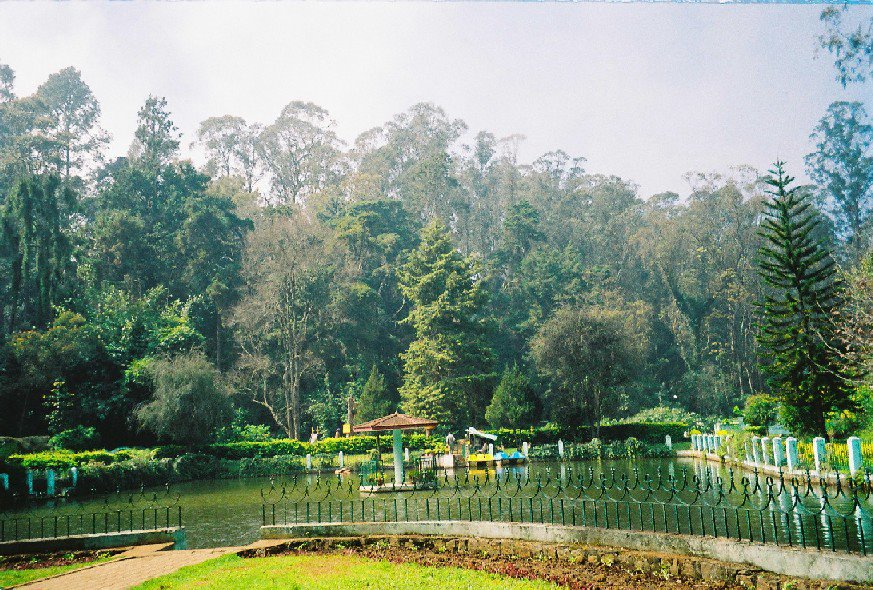
Little pond at the bottom of the ravine


The USP of this park is the collection of trees and plants it hosts. It is divided into eight major sections and contains over 1,000 species of plants from the Himalayas, Australia, Africa, China, Europe, Brazil and other places. It is this painstaking 100 year old collection of trees that should be the ideal interest for any nature lover visiting Coonoor. There is a representative of almost all genera in the plant kingdom here. This is also the home of the Himalayan holy Rudrakhsa and even the Australian Monkey Puzzle.

Set in a natural forest

Pines and Firs of all kinds adorn this garden. There is even a separate rose garden within the park. The park is ideal for a long and idle walk through nature. An enviable factory of fresh oxygen, the park is carpeted with some fine grassy lawns and winding pathways that lead to the bottom of the ravine where a small man made pond with an island adds to the landscape.

Mist and light mingle with the fresh greenery


Tourists prefer to cover as much as possible in a single day and therefore do not enjoy the park much. The best way to visit this park is to give it at least half a day. I have two interests in Ooty now...The Nilgiri Mountain Railway and Sims Park and looks like my day will be well spent divided between the two. :)

Friday, January 20, 2006

Nilagiri Mountain Railway #3


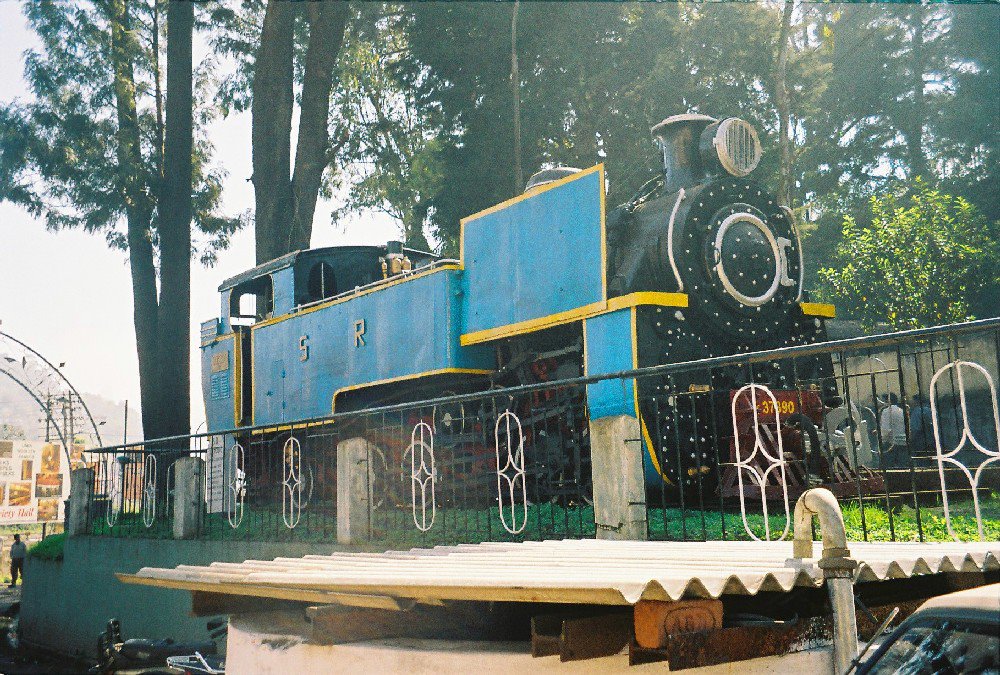
Rest In Dignity? A nicely painted Winterthur plinthed in front of Coonoor station house. The Abt system is not visible under the loco, however.


A flagstone for the loco describing its features. Even age....looks like the loco is still in running condition, for the age is changed every year.


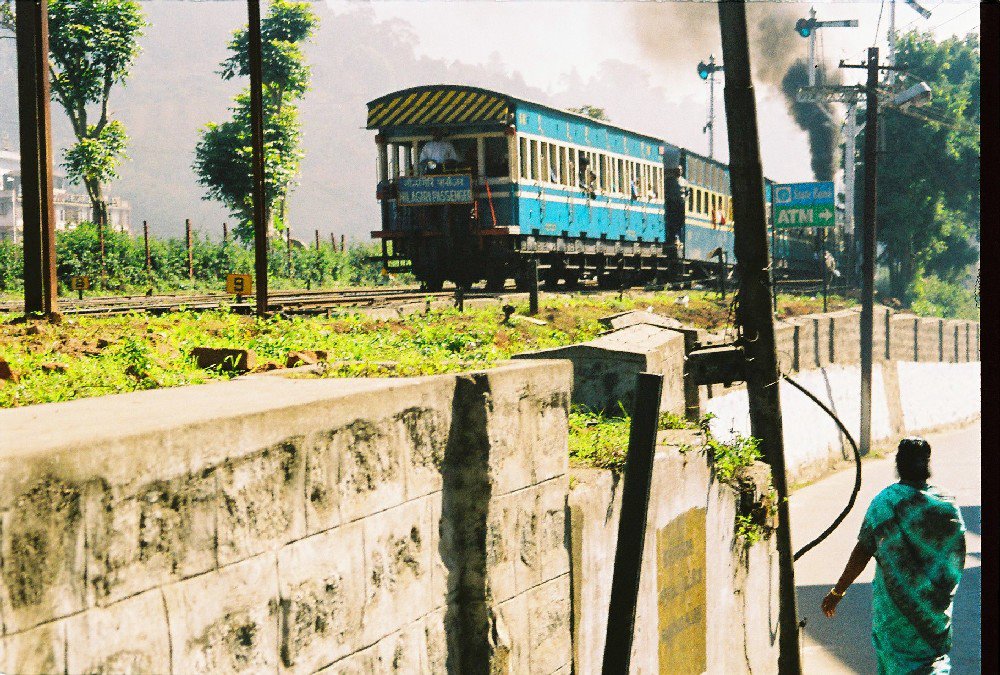
The Mettupalayam-Ooty passenger slowly ambles into Coonoor after a 4 hour uphill crawl at 13kmph.


The coal is all used up! The loco, coaches and even the fireman are all covered with soot. A common site many years ago, now reserved only for the Nilagiri Mountain Railway. The passenger moves onto the only platform at Coonoor.


Many fans for the steaming hot Swiss Miss. One thing I have observed is that this train is more famous on the Coonoor-Ooty stretch than up or down to Mettupalayam. Hordes of tourists of all kinds and nationalities temporarily ditch their preferred mode of transport at Coonoor/Ooty and take a joy ride in this train. They even take snaps of the YDM4 diesel loco thinking it to be a part of the 'toy train' set-up. But the steamer has its own fans too, like in the photo.


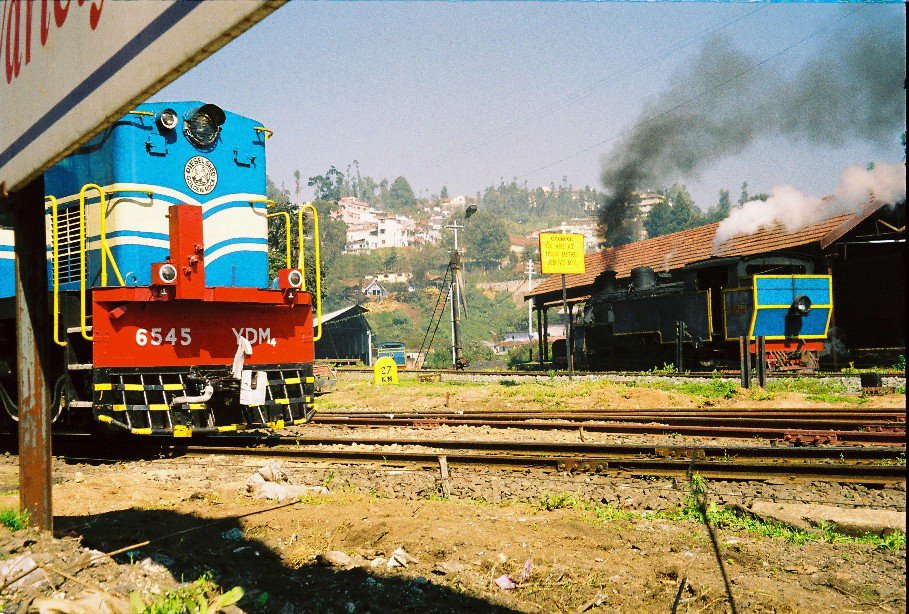
The diesel and the steamer. Looks like it is straight out of Thomas The Tank Engine...the steamer would be Giggles and the Diesel is Barney....dunno ...the names just came to my head :-)


Giggles and Barney again...a critical mind would see a great deal in this photo....the locos, the distance between them, the angle etc. I see only one thing...darn! I screwed up the snap :)


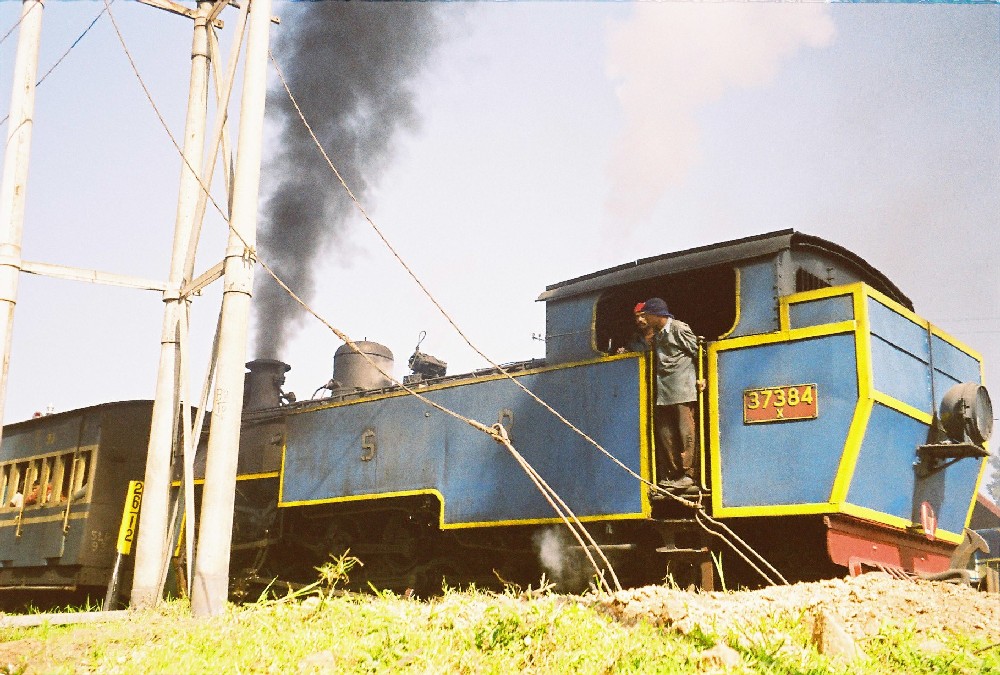
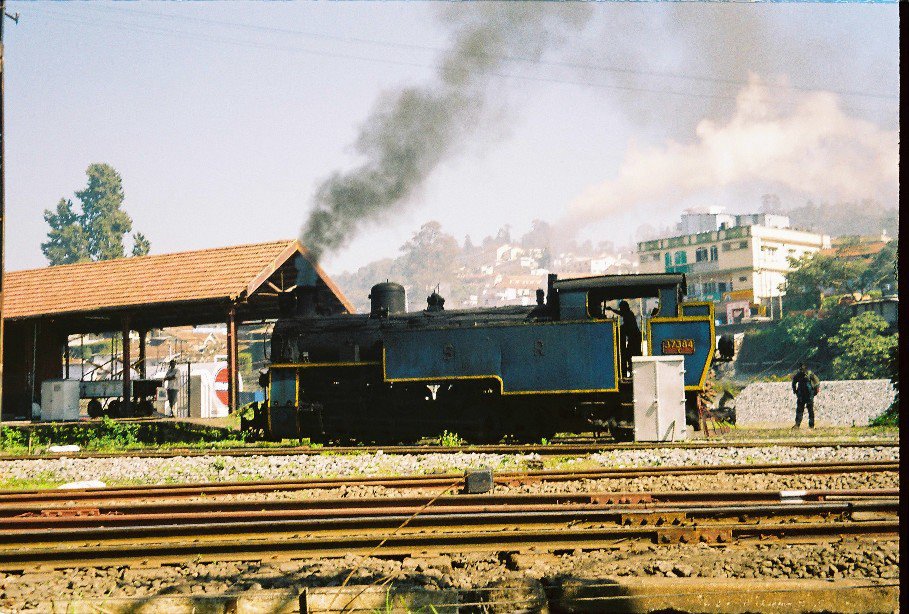
Giggles is shunting itself out of the main line onto the pit-lane....sheesh that is Formula 1 jargon!...well towards its steam shed.


No more giggles (pun intended)! The Winterthur steam loco looks like it could do with a nice clean up and paint job in the front. After all, it is a Unesco heritage!Look at the plinted loco...it is all clean and polished.


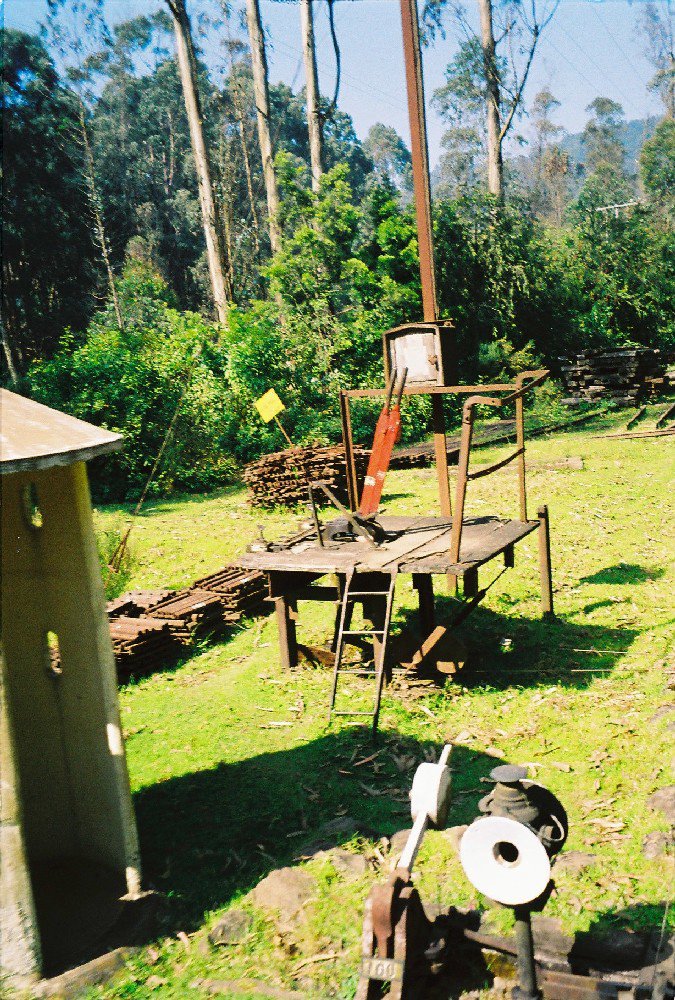
Stations on the NMR are compact and cute. Note this points levers right beside the station master's office at Ketti. They are newly painted in bright colors. After all, they are a heritage under UNESCO.

Wednesday, January 18, 2006

Nilagiri Mountain Railway #2


These points levers are heritage now as Unesco has given the entire line a World Heritage status.


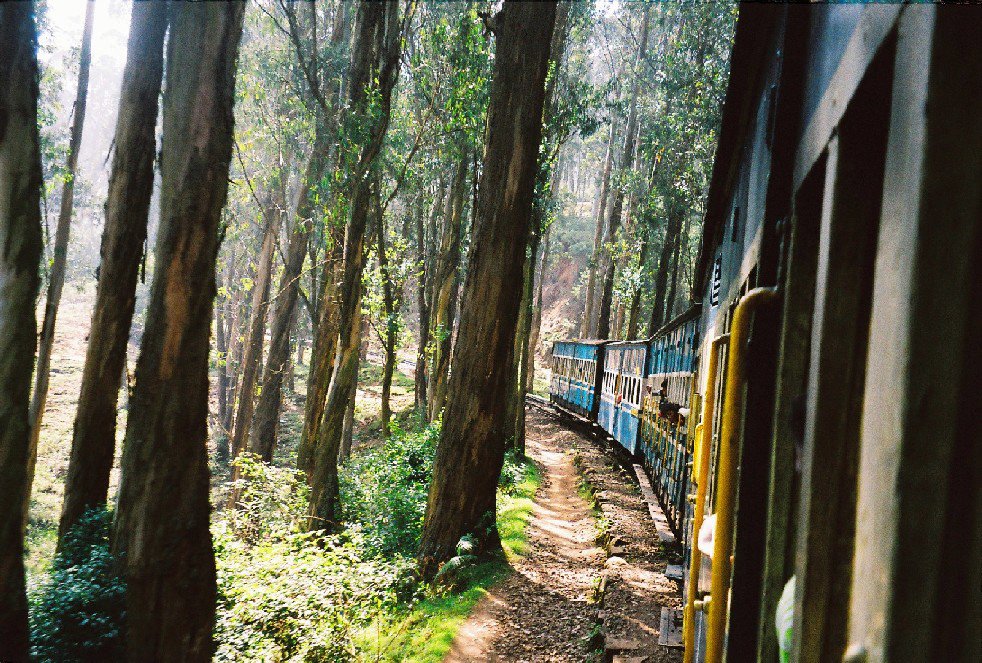
Lovely woods en route Ooty


Arriving at Ketti, a cute little station with its own little garden and even a level crossing.


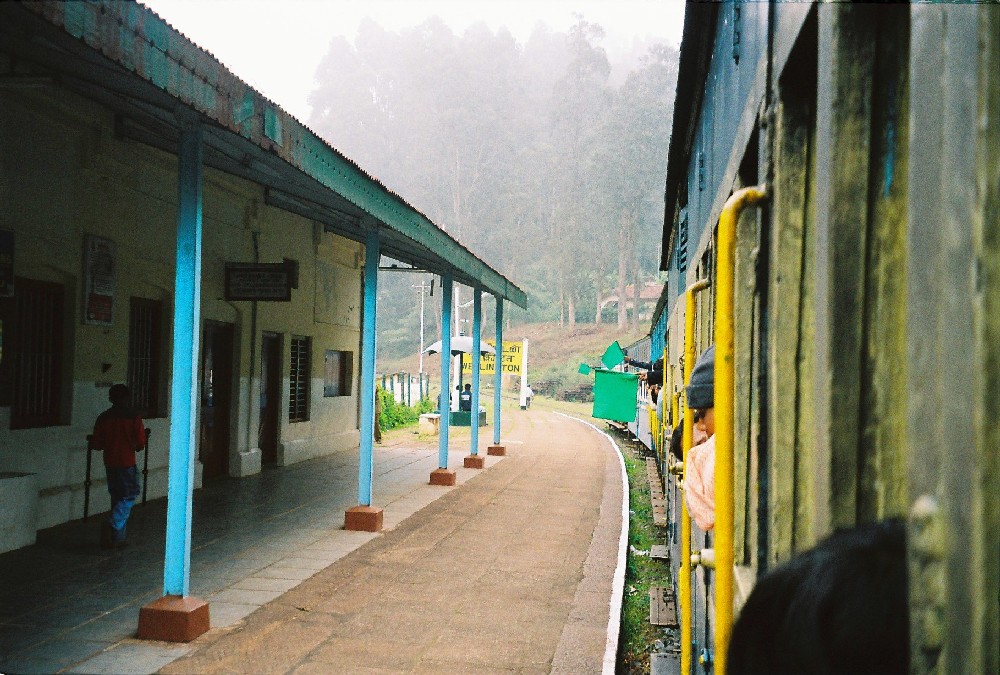
Coonoor-Ooty shuttle leaving Wellington. Note the three flags. This is the only train I know that has 4 guards!


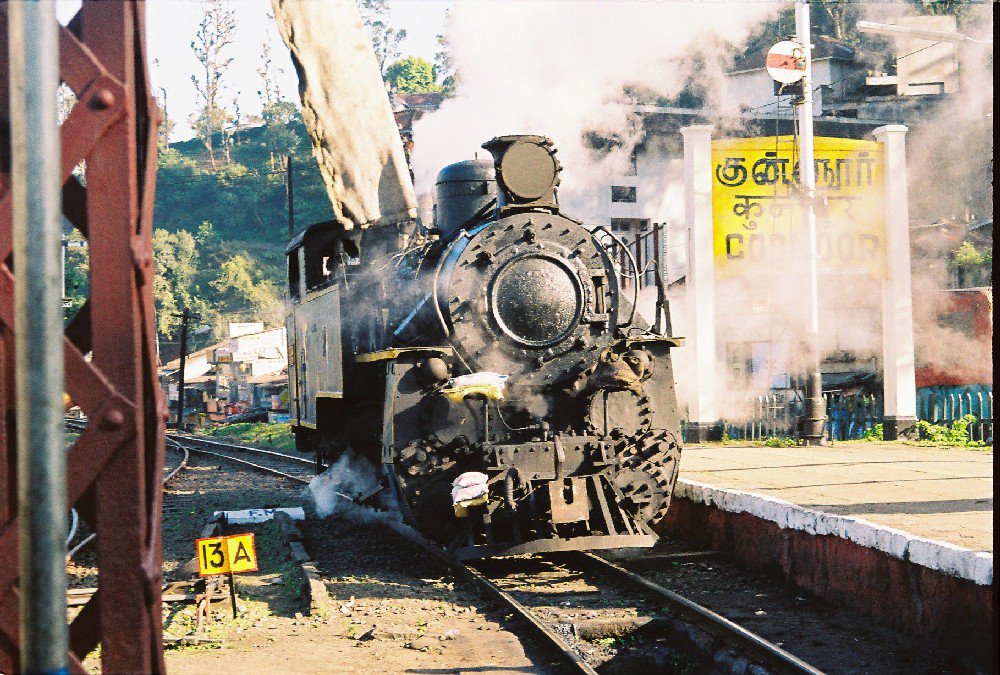
The Swiss Miss arrives to haul the Ooty-Mettupalayam passenger downhill. Note the sandbags in the front. these are meant to provide friction for the wheels downhill.


A closer look at the locomotive.


The Mettupalayam train is set to depart from Coonoor on the right while the Coonoor-Ooty shuttle awaits line clearance.